Exchanging best practices and active mentoring were the focus of the ERC panel discussion organized as part of the MTA's mathematics month.
ERC is the European Union's largest grant scheme supporting frontier research, providing long-term funding for research with high potential returns. In 2021–2027, ERC has more than €16 billion to be distributed on the basis of scientific excellence as the sole selection criterion.
This seemingly dry definition inspires thousands of researchers' ambitions and dreams every year, and more and more people are deciding to apply: there has been a significant increase in the number of applicants recently. To be successful, however, the logic and language of the ERC must be understood, and there are countries where a whole team of professionals prepares applicants.
Hungary needs to strengthen its position both in terms of the quality and the number of submitted ERC proposals – this was one of the key conclusions of the panel discussion organized by the Hungarian Academy of Sciences. The event was held as part of the Month of the Mathematics Section, at the initiative of academician András Stipsicz, Hungarian member of ERC's Scientific Council and Director of HUN-REN Alfréd Rényi Institute of Mathematics.
“Researchers at Rényi Institute and the Institute of Experimental Medicine (KOKI) have won a significant share of all ERC grants awarded to applicants based in Hungary. We have the experience and the know-how to support researchers who are planning to apply,” András Stipsicz said after the meeting. He himself has already won ERC funding twice, both Advanced Grants.
At the age of 59, the director has effectively continued Rényi Institute’s success story: so far, the Institute has secured 13 ERC grants, with five currently ongoing at the Mathematical Research Institute, which employs around 150 researchers. With his support as its leader, Rényi’s own researcher mentoring programme operates to identify and nurture young mathematical talents who strive for excellence and are willing to take on the challenge of ERC-level competition.
| The European Research Council (ERC), set up by the European Union in 2007, is the premier European funding organisation for excellent frontier research. It funds creative researchers of any nationality and age, to run projects based across Europe. ERC offers four core grant schemes: Starting Grants, Consolidator Grants, Advanced Grants and Synergy Grants. ERC is led by an independent governing body, the Scientific Council. Maria Leptin has been the President of the ERC since November 2021. |
The director envisions the ERC mentoring programme as a collaborative initiative involving research institutions with experience across different scientific fields – including the HUN-REN Institute of Experimental Medicine, the Research Centre for Astronomy and Earth Sciences, and Eötvös Loránd University (ELTE) – as well as with the participation of the Hungarian Academy of Sciences. The latter also hosts the ERC National Contact Point (NCP). He believes that although many valuable activities are currently taking place across the country, they remain fragmented, and that it is both worthwhile and necessary to integrate them into a coherent system.
Hungarian Characteristics and ERC Prospects
Systemic integration is all the more justified because distribution of ERC grants awarded to researchers working at various Hungarian institutions is highly uneven. Researchers at Rényi Institute and the Institute of Experimental Medicine (KOKI) can meet their ERC-winning senior colleagues on a daily basis and ask them questions. At other research institutions, ERC grants are won only sporadically, without a conscious ERC strategy or established protocols. There are also institutions whose researchers remain more distant from ERC opportunities — either because their research topics are less international in nature, or because they have access to other major funding schemes. Unfortunately, there are also institutions whose researchers require significantly more support than others when facing this challenge.
In all three types of institutions, researcher mentoring is essential if we want more ERC funding to reach Hungarian research organisations. “Different approaches are needed in all three cases,” said Miklós Abért, senior research fellow at Rényi Institute and himself an ERC grantee, in response to a question from renyi.hu. Miklós Abért received ERC funding (2016–2021) for his project Asymptotic invariants of discrete groups, sparse graphs and locally symmetric spaces.
“Hungary requires a unique approach. Poland, for example, has a very strong mentoring programme, but it does not scale well to a country of our size. The Israeli model is better than ours: they have an abundance of talents and know well how to deal with them. There is also a well-functioning Czech model that we are trying to adapt the successful elements of. What we need is a system that works under Hungarian circumstances and at our scale.
From smaller, economically less developed countries, a large number of researchers move abroad or into industry. This is something to adapt to. Talent development requires overproduction — not only for this reason, but also because it is rarely possible to predict who will become a successful researcher.
At Rényi Institute, we pay attention to all young researchers: we consult with them regularly, regardless of their ERC prospects. But if a young researcher is sufficiently ambitious and talented, wants to apply for an ERC grant, and is thinking in terms of a strong career path, then additional support is needed — conversation alone is not enough,” he added.
Sharing ERC Expertise
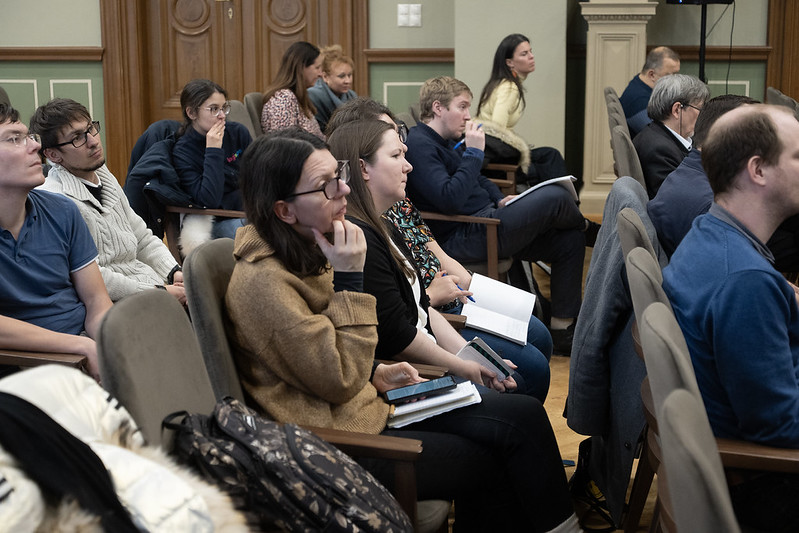
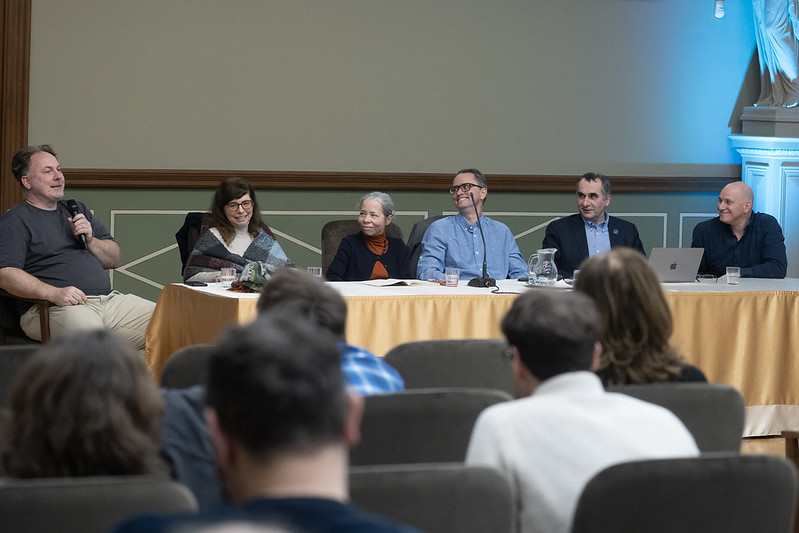
Additional invited speakers at the panel discussion held in the historic building of the Hungarian Academy of Sciences included Katalin Borvölgyi, a staff member of the ERC National Contact Point (Hungarian Academy of Sciences). Alongside András Stipsicz, the panel also featured Ádám Dénes, researcher at the Institute of Experimental Medicine (KOKI); Maria Lugaro, representing the HUN-REN Research Centre for Astronomy and Earth Sciences; and Sándor Horváth, lecturer at Eötvös Loránd University (ELTE) and founder of its mentoring programme. They shared their conclusions and advice with an audience of approximately 150 early and mid-career researchers.
All participants agreed that providing comprehensive, multi-level support to ERC applicants is well worth the effort. Experience clearly shows that when such support is available, the number of successful applicants significantly increases. Excellence alone is not sufficient: one must understand the logic of the ERC. Many in the audience were surprised to hear from Maria Lugaro that preparation should begin in good time — already 9–11 months before the planned submission.
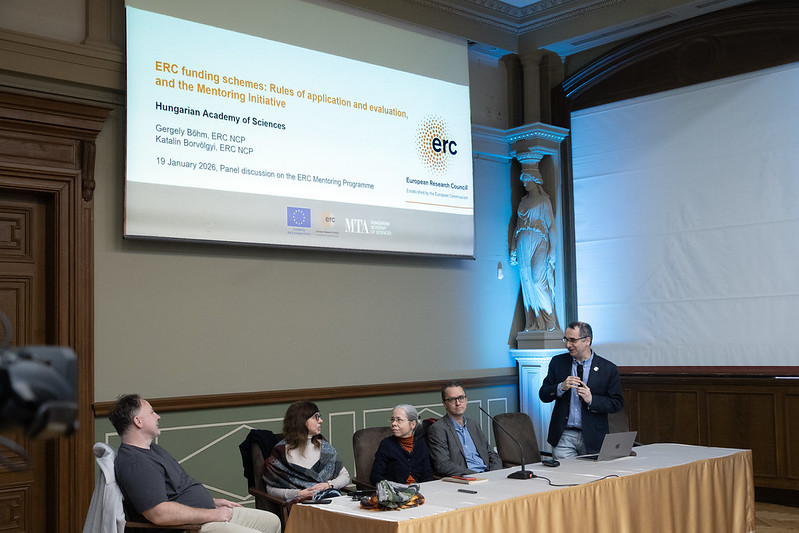
“ERC provides a funding security that enables researchers to achieve outstanding results even in turbulent times,” András Stipsicz said in his presentation, adding that he sees particularly strong potential in preparing applicants for Starting and Consolidator Grants. The Hungarian member of ERC's Scientific Council spoke about the delicate balance between feasibility and novelty, as well as the importance of articulating a clear research vision and long-term goals. “It must be demonstrated that the specific applicant is the right person to implement the idea outlined in the proposal,” he emphasised.
Miklós Abért drew attention to the transformative nature of ERC experience. For this very reason, it also requires courage: “Many researchers are intimidated by ERC. It is indeed a major challenge, and potential failure can sometimes be difficult to process. Without scientific ambition, it is impossible to apply for an ERC grant — one cannot win it just by accident,” he stressed. “There is an emotional risk involved, which distinguishes researchers from one another.”
An ERC success simultaneously signals scientific excellence and international competitiveness. Research carried out with ERC funding can foster progress not only within the grantee’s field, but also strengthen the position of the host institution among Europe’s leading research sites. Such grants can pave the way for new research groups, international collaborations, and major scientific breakthroughs.
The large number of early-career researchers attending the event already demonstrates that it is worth organising and integrating initiatives that have so far operated only sporadically. “In the near future, we will begin building a Hungarian mentor database based on ERC’s logic and evaluation principles,” András Stipsicz announced. He also emphasised that applications are both possible and necessary across all three major research domains — mathematics and natural sciences, humanities, and life sciences. (At ELTE Research Centre for the Humanities, the ERC Future Programme launched in 2021 under the leadership of Sándor Horváth at the Institute of History has already produced three ERC grantees – ed.)
The 2025 ERC Consolidator Grant call attracted more applications than ever before: of the 3,121 applicants, 349 researchers were ultimately awarded funding, amounting to a total of €728 million. Successful projects will be implemented at universities and research institutes in 25 countries. As Maria Leptin, President of ERC, put it: ‘To see all this talent with groundbreaking ideas, based in Europe, is truly inspiring. This bold research may well lead to new industries, improve lives and strengthen Europe’s global standing. This was one of the most competitive ERC calls ever, with record demand and also many excellent projects left unfunded. It is yet another reminder of how urgent the call for increased EU investment in frontier research has become.’ |
What advice can be given to those currently considering the submission of an ERC proposal? “At times, one has to question scientific hierarchies, just as in elite sports,” Miklós Abért summarised. “Occasionally, resistance and difficulties have to be broken through. Sometimes, in hindsight, one cannot even recall how a scientific obstacle was overcome — this is not always a fully conscious process.
Beyond this, it is important that those who wish to apply do not fragment themselves with part-time positions. These are so exhausting that they severely undermine long-term research. In the short term, one can still do research the same way, but the real danger is that long-term perspective gradually closes off. ERC-level research — i. e. making a career leap — requires a certain level of intellectual and professional stamina that must be maintained, and holding multiple secondary positions erodes precisely this capacity.
I would also tell them to follow their own way of thinking in scientific terms, regardless of what others — even more experienced colleagues — may say. A researcher, like any human being, is likely to make mistakes. What matters is to make our own mistakes, rather than repeating those of others. One has to dare to experiment, to commit, to see things through, to hit one’s head against the wall — and then learn from it all.”